
Activating Spiritual Senses: The Key of Oneness Echad
Opening the eyes of the heart - Part 12
“For this reason a man shall leave his father and his mother, and be joined to his wife; and they shall become one flesh.” (Genesis 2:24, NASB)
Listen to The Key of Oneness
The Key of Oneness Echad
One of the mysteries of creation is the echad, the oneness. From the beginning God defined Himself as the One. The main instruction to Israel that would be repeated through Yeshua’s greatest commandment was the oneness of God:
“Hear, Israel! The LORD is our God, the LORD is one!” (Deuteronomy 6:4, NASB)
This instruction or admonition is called the Shema, or the listening. Let’s look at this word.
The Ancient Pictographic Meaning of Shema
In the early pictographic Hebrew script, around 1000 BCE and earlier, each letter of the word Shema was a picture representing a concrete object and a conceptual meaning:
Shin (ש): Originally drawn as two front teeth, meaning consume, destroy, or press.
Mem (מ): Originally drawn as flowing water waves, meaning water, chaos, or massive liquid and seas.
Ayin (ע): Originally drawn as a human eye, meaning to see, watch, know, or understand.
When put together as a visual concept, the ancient pictographs for Shema tell a story. They unite hearing and perceiving, represented by the eye’s seeing and knowing, with an active response. Root researchers interpret the combined pictographs as “what consumes the chaos that you see,” or “the fire or teeth of authority destroying the chaos of ignorance through true sight and understanding.”
What is fascinating about this word is the connection between listening and perception or seeing. We have a sentiment in our language that states, “Seeing is believing.” The faith movement reverses it by saying, “Believing is seeing.” I don’t want to get into this argument, but I do want to make the connection that our attention precedes our listening.
The Lord Is Our God
This is why I believe that the next part of the Shema is the statement that “the LORD is our God.” Gods were and are viewed as sources of power to succeed in life. In most nonbiblical cultures, there are gods for every area of need. There are fortune gods, health gods, traveling gods, gods of sex, and gods of pure power.
The Bible is unique in that it points us to the one true God. We are encouraged to seek Him and Him alone. Yeshua makes this connection:
“For this reason I say to you, do not be worried about your life, as to what you will eat or what you will drink; nor for your body, as to what you will put on. Is life not more than food, and the body more than clothing? Look at the birds of the sky, that they do not sow, nor reap, nor gather crops into barns, and yet your heavenly Father feeds them. Are you not much more important than they?” (Matthew 6:25–26, NASB)
“And which of you by worrying can add a single day to his life’s span? And why are you worried about clothing? Notice how the lilies of the field grow; they do not labor nor do they spin thread for cloth, yet I say to you that not even Solomon in all his glory clothed himself like one of these.” (Matthew 6:27–29, NASB)
“But if God so clothes the grass of the field, which is alive today and tomorrow is thrown into the furnace, will He not much more clothe you? You of little faith! Do not worry then, saying, ‘What are we to eat?’ or ‘What are we to drink?’ or ‘What are we to wear for clothing?’ For the Gentiles eagerly seek all these things; for your heavenly Father knows that you need all these things. But seek first His kingdom and His righteousness, and all these things will be provided to you.” (Matthew 6:30–33, NASB)
He is clearly identifying God as the ultimate power source. When we connect to God, we call this the blessing of God. It is inspired through an appreciation of the power source and the active recognition that comes through trusting and listening to that source.
So we see a connection between the Shema and the recognition of the one true God as LORD, the source of blessings in life.
The Ancient Pictographic Meaning of Echad
To emphasize the essential nature of this relationship, we come to echad, the oneness. In the ancient Paleo-Hebrew script, the letters were pictures representing concrete physical objects and deeper conceptual meanings:
Aleph (א): The first letter, depicted as an ox head. It symbolizes strength, power, leadership, or the first and chief.
Chet (ח): The middle letter, depicted as a tent wall or fence. It symbolizes separation, outside, or a barrier, but also protection and security enclosing a space.
Dalet (ד): The final letter, depicted as a tent door or hanging flap. It symbolizes a path, entrance, gateway, or moving through to the other side, as well as judgment or decision at the threshold.
When combined pictographically, echad tells a story: “The strength or leader behind the protective wall or barrier at the doorway or opening.” It portrays a unified household, camp, or family gathered safely inside under one head.
Why is the end of the Shema a declaration of echad? Oneness is the heart of listening. God designed us to recognize and listen to one voice so that we can be clear and confident. Yeshua tells us:
“Truly, truly I say to you, the one who does not enter by the door into the fold of the sheep, but climbs up some other way, he is a thief and a robber. But the one who enters by the door is a shepherd of the sheep. To him the doorkeeper opens, and the sheep listen to his voice, and he calls his own sheep by name and leads them out. When he puts all his own sheep outside, he goes ahead of them, and the sheep follow him because they know his voice.” (John 10:1–4, NASB)
The echad of the shepherd is the key to the loyalty and security of those who listen and trust Him for their lives.
The Opposite of Echad
What is the opposite of echad? Multiple voices, which bring confusion, hesitancy, and doubt. This began at Babel:
“Now all the earth used the same language and the same words. And it came about, as they journeyed east, that they found a plain in the land of Shinar and settled there. Then they said to one another, ‘Come, let’s make bricks and fire them thoroughly.’ And they used brick for stone, and they used tar for mortar. And they said, ‘Come, let’s build ourselves a city, and a tower whose top will reach into heaven, and let’s make a name for ourselves; otherwise we will be scattered abroad over the face of all the earth.’” (Genesis 11:1–4, NASB)
There is a unity here: one language, one voice, and one desire for a name. What is the problem with wanting one name?
The Ancient Pictographic Meaning of Shem
Let’s look at the original Hebrew for the word name, or Shem.
Shin (ש): Originally pictured as two front teeth. It symbolizes things that are sharp, pressing, crushing, eating, or destroying and consuming, like fire.
Mem (מ): Originally pictured as flowing water or waves. It represents water, liquid, chaos, massive strength, or a raging current or sea.
When combined in Paleo-Hebrew, Shin and Mem metaphorically define a name not as a mere label, but as an expression of one’s entire identity, character, and existence. Ancient Hebrew thought equates a person’s name with breath and life force. To destroy or blot out a name is symbolically viewed as cutting off sustenance and life.
The eternal Book of Life is a book of names, Shem:
“And nothing unclean, and no one who practices abomination and lying, shall ever come into it, but only those whose names are written in the Lamb’s Book of Life.” (Revelation 21:27, NASB)
The name with which we are identified reveals the one with whom we are one. This is why the name is changed into one name at the marriage ceremony.
The Power Key Exposed at Babel
Returning to Babel, we read:
“Now the LORD came down to see the city and the tower which the men had built. And the LORD said, ‘Behold, they are one people, and they all have the same language. And this is what they have started to do, and now nothing which they plan to do will be impossible for them. Come, let Us go down and there confuse their language, so that they will not understand one another’s speech.’” (Genesis 11:5–7, NASB)
“So the LORD scattered them abroad from there over the face of all the earth; and they stopped building the city. Therefore it was named Babel, because there the LORD confused the language of all the earth; and from there the LORD scattered them abroad over the face of all the earth.” (Genesis 11:8–9, NASB)
The power key exposed here is echad, the power of agreement and oneness. The oneness and agreement at Babel was humanity with itself apart from God. This technology is so powerful that it challenges the place of God in our lives. I believe that it was during this period that many of the miraculous ancient structures were built around the world. These “towers” of Babel were all about humanity assuming the place of the echad.
Today we are seeing more attempts at echad through the technologies of artificial or super intelligence. Realize that these entities are really just a new language of echad, or oneness, apart from God. This is why it scares so many people.
The True Echad
The true echad, or oneness, comes from coming into agreement with God. Yeshua stated this directly:
“I am not asking on behalf of these alone, but also for those who believe in Me through their word, that they may all be one; just as You, Father, are in Me and I in You, that they also may be in Us, so that the world may believe that You sent Me.” (John 17:20–21, NASB)
“The glory which You have given Me I also have given to them, so that they may be one, just as We are one; I in them and You in Me, that they may be perfected in unity, so that the world may know that You sent Me, and You loved them, just as You loved Me.” (John 17:22–23, NASB)
“Father, I desire that they also, whom You have given Me, be with Me where I am, so that they may see My glory which You have given Me, for You loved Me before the foundation of the world.” (John 17:24, NASB)
“Righteous Father, although the world has not known You, yet I have known You; and these have known that You sent Me; and I have made Your name known to them, and will make it known, so that the love with which You loved Me may be in them, and I in them.” (John 17:25–26, NASB)
Activation Restoring the Echad
Practice quiet time with His voice.
Create space: Choose a consistent, quiet physical location and a specific time of day, such as early morning or a lunch break, to train your soul to rest.
Remove distractions: Turn off phone notifications, silence your device, and step away from ambient noise.
Start with stillness: Begin with just five to ten minutes of silence to quiet your thoughts, take slow breaths, and release heavy anxieties.
Engage Scripture: Read a short passage or a single Bible verse very slowly and prayerfully, allowing the Holy Spirit to highlight specific words or phrases.
Listen and journal: Write down subtle impressions, recurring themes, or gentle convictions that rise in your heart to anchor the insights and test them against the Bible.
Surrender and obey: Conclude by yielding your will to what you sense God saying, letting peace act as your guide and confirmation.
Related
To add this web app to your homescreen, click on the "Share" icon
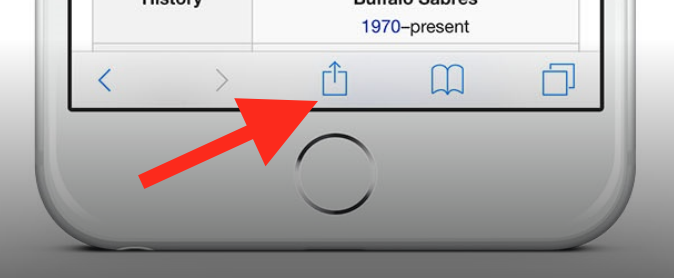
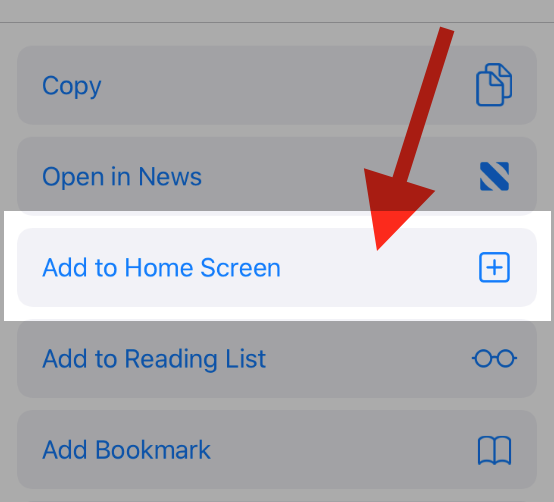
Then click on "Add to Home"
To add this web app to your homescreen, click on the "Share" icon
Then click on "Add to Home"
It looks like your browser doesn't natively support "Add To Homescreen", or you have disabled it (or maybe you have already added this web app to your applications?)
In any case, please check your browser options and information, thanks!
It looks like your browser doesn't natively support "Add To Homescreen", or you have disabled it (or maybe you have already added this web app to your applications?)
In any case, please check your browser options and information, thanks!